Imagine you’re offered a choice: £1 million in cash today, or a penny that doubles in value every day for 30 days.
At first, it seems like no choice at all. A cool million surely beats a single, measly penny – no matter how much it doubles.
But watch that humble penny on its journey, and you might rethink your decision:
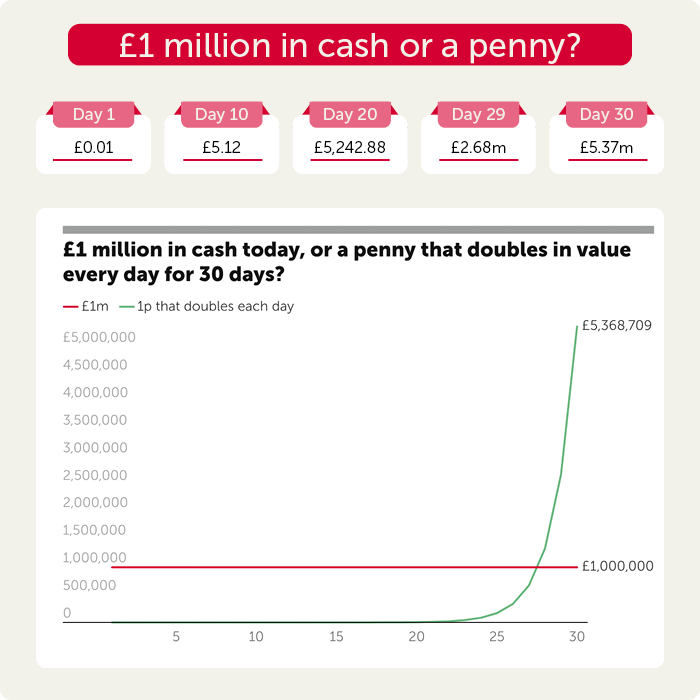
That’s right. In just 30 days, that penny grows to more than £5 million. And you’ll need a bigger piggy bank.
Welcome to the power of compounding.
So how does it work?
Okay, in the real world, no one’s handing you magic pennies. But compounding is still pretty magical, even if the growth is slower than doubling each day.
The simplest way to think about compounding is: earning returns on your returns.
Say you invest £1,000, and it grows by 7% in a year – leaving you with £1,070. In year two, you earn 7% again not on your original £1,000 but on £1,070. Then the year after, on £1,144.90. The following year on £1,225.04. And so on.
The more time passes, the larger your gains grow. It’s the same magic trick as with the doubling penny, just on a longer timeline.
Why time = money
Compounding is definitely powerful. But at first, your gains can feel modest. That’s because the real magic happens not sooner, but later.
So the earlier you get your snowball rolling, the better. A few extra years at the start can make a startlingly big difference by the end – even if you begin with small sums.
And don't be discouraged if you think you've left it too late. Later is better than never, and the best time to start is always now.
The compounding curve
Let’s revisit the example from earlier, when you invest £1,000, and it grows 7% each year. Here’s what would happen to that £1,000 over the next three decades:
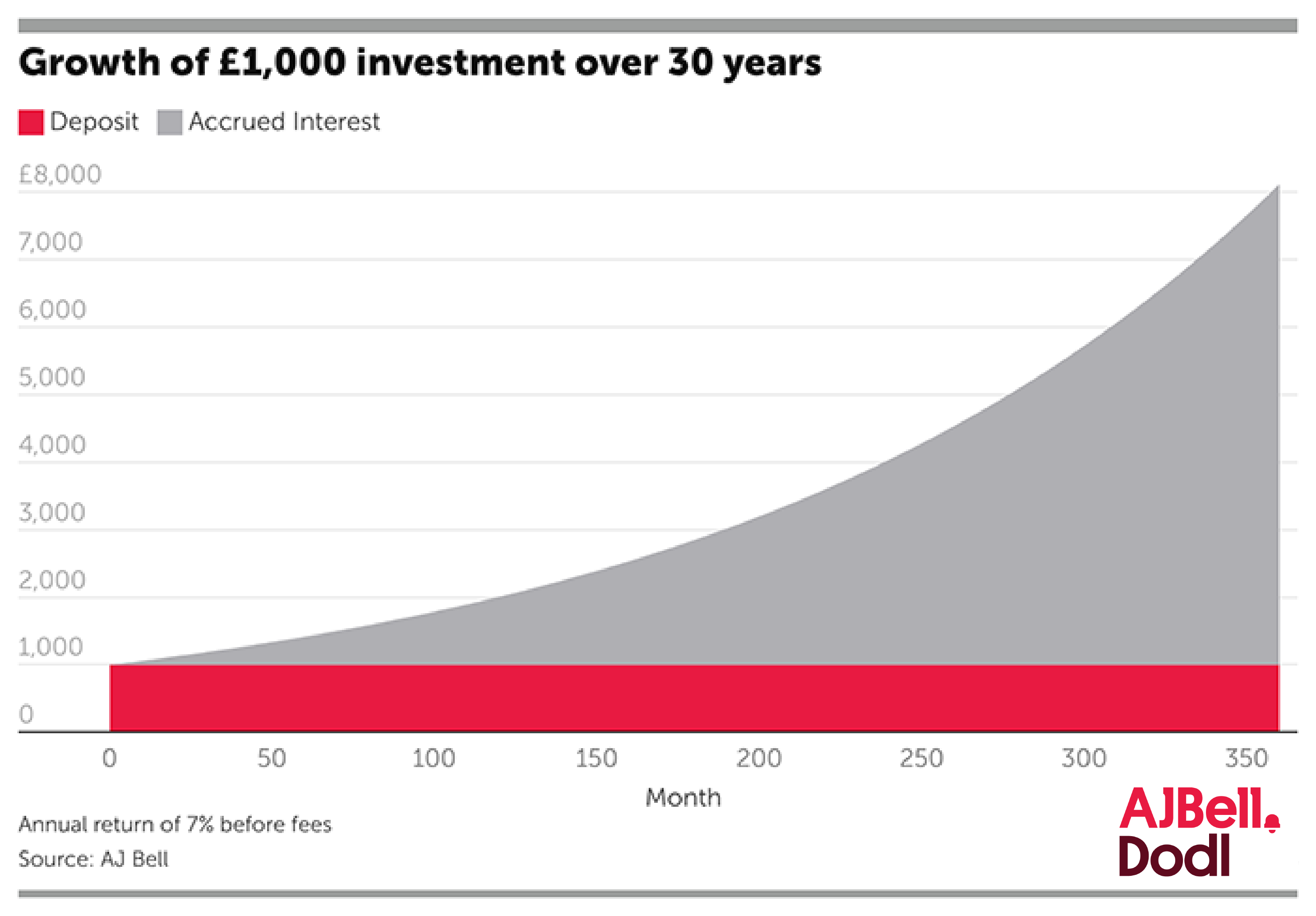
Your £1,000 would have grown to a very tidy £8,116.50. And notice how the curve steepens with time. By year 30, you’d be scooping an annual return of £547.19 – that’s more than half of your original investment in a single year.
And remember, you’ve not topped up your initial investment in all that time. (Just keep in mind our examples don’t include investing fees.)
Little and often still works wonders
Don’t have £1,000 up front to invest? Don’t worry, because regularly investing smaller sums can be your friend too.
Let’s look at what happens if you invest £50 every month for 30 years – at the same rate of return of 7%.
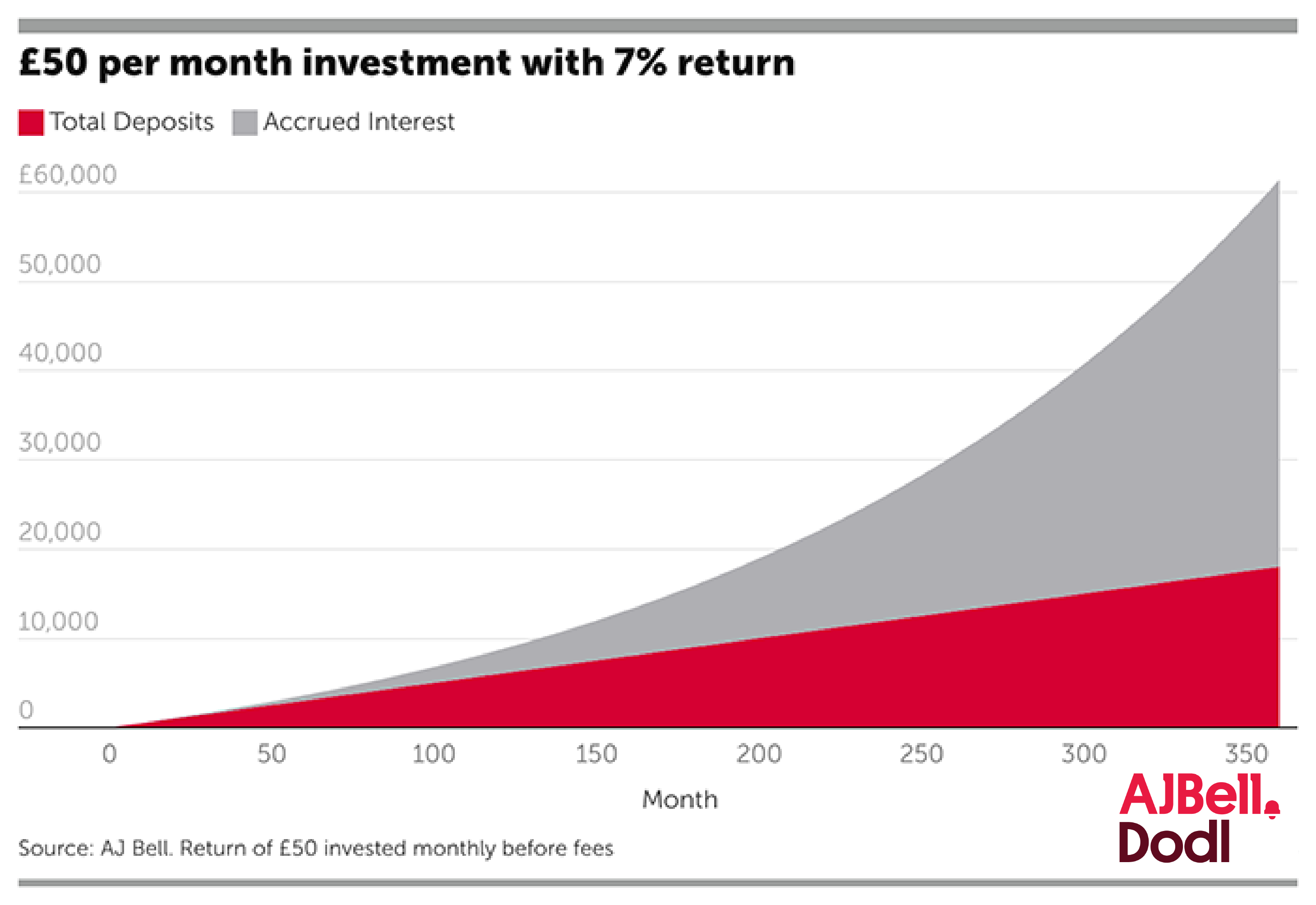
That's right – by year 30 you'd be sitting on a hefty £61,404.37, and earning a £4,117.53 annual return before fees.
And in this example, you’d only actually put in £18,050 over those 30 years – meaning over £43,000 of that pot is pure 'magical' growth.
No magic pennies needed.
Get your snowball rolling
With compounding, it can be expensive to wait. Thankfully, it’s speedy to invest more on Dodl.
Our streamlined range of investments makes choosing easy. And with our AJ Bell funds, you can leave all the work to our award-winning experts.
Prefer the little-and often-approach? It only takes minutes to set up a regular investment.
Read more in this series
Don’t have a Dodl account yet? Open yours and get started.
🔔Remember that the value of investments can change, and you could lose money as well as make it. AJ Bell Dodl doesn’t give advice. If you’re not sure about the risks of investing, please speak to a qualified financial adviser.