To some, it’s a no-brainer.
Everyone knows the caveat with investing: ‘the value of your investment can go down as well as up’. You could lose money.
So why choose an option where you might end up with less than you started with? Sounds like a gamble nobody should take.
But plenty of people do choose to invest – millions in the UK alone. And it isn’t because they're reckless. It’s because cash isn't as ‘safe’ as it looks.
The hidden danger of saving
You’ve probably heard of inflation: a measure of how quickly prices rise over time.
If you’re trying to grow your money, inflation is what you’re trying to stay ahead of. And it’s the reason why – despite seeming safe – cash saving can leave you worse off.
Simply put, if your cash isn't outgrowing the cost of goods and services, your wealth is shrinking – even if the number in your bank account stays the same.
Why it matters over the long term
Of course, cash has its place, especially in the short term. In fact, it’s extremely good practice to keep an emergency cash sum you can dip into if needed.
But over the years and decades, cash saving can seriously hold you back. Let’s dive into the data to show you why.
The cash saving story
Cast your mind back to 2021. Let’s suppose that you had a spare £10,000 and wanted to get it growing. So you popped it in a savings account.
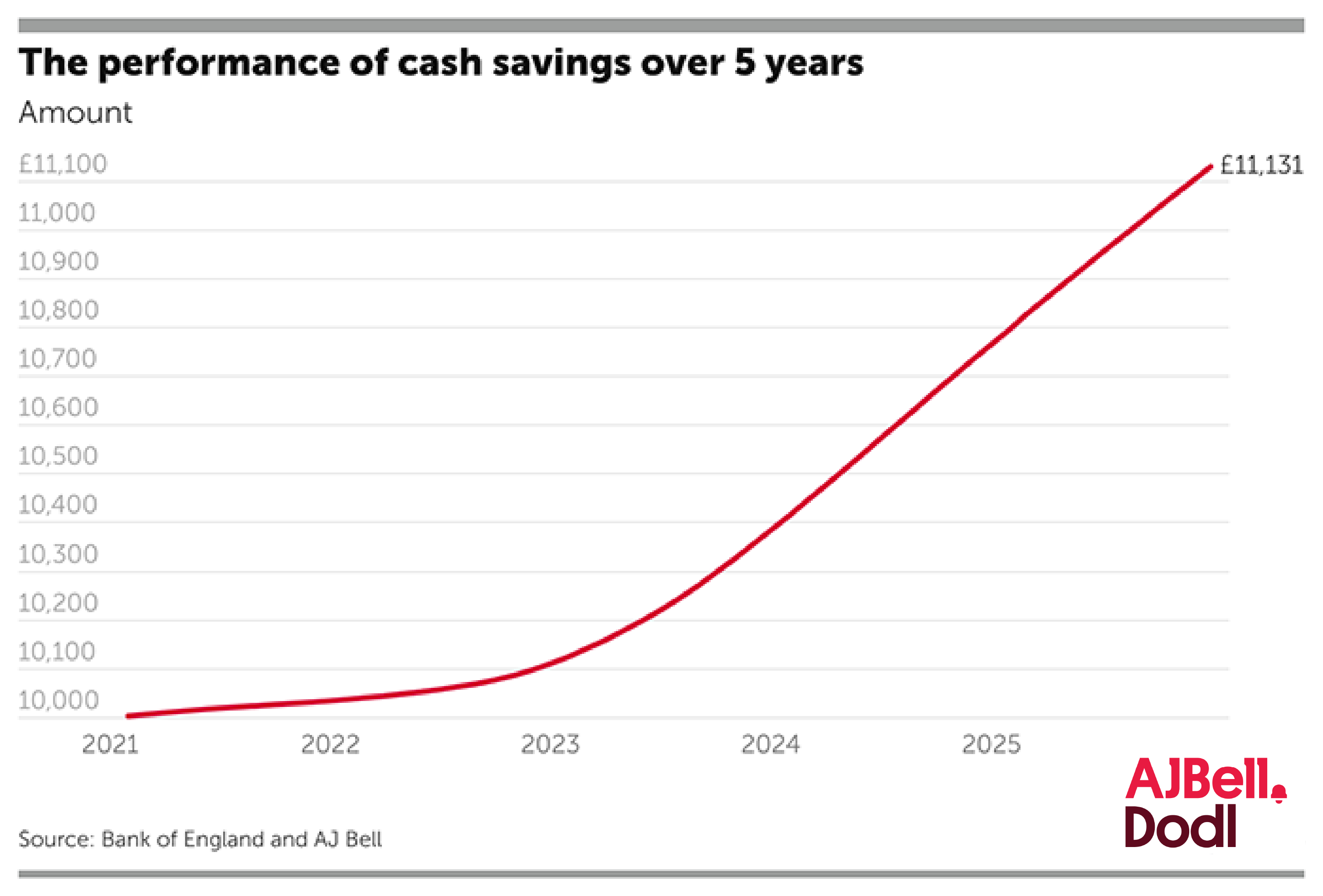
Five years later – based on typical UK savings account interest rates (a Cash ISA) – your £10,000 would have become £11,131. That’s a 11.31% uplift. Pretty decent, right?
It might seem like it. But it’s a very different story when you factor in (you guessed it) inflation.
The inflation impact
Over the same period that your savings grew 11.31%, inflation jumped by 28.19%. Here’s where that leaves you.
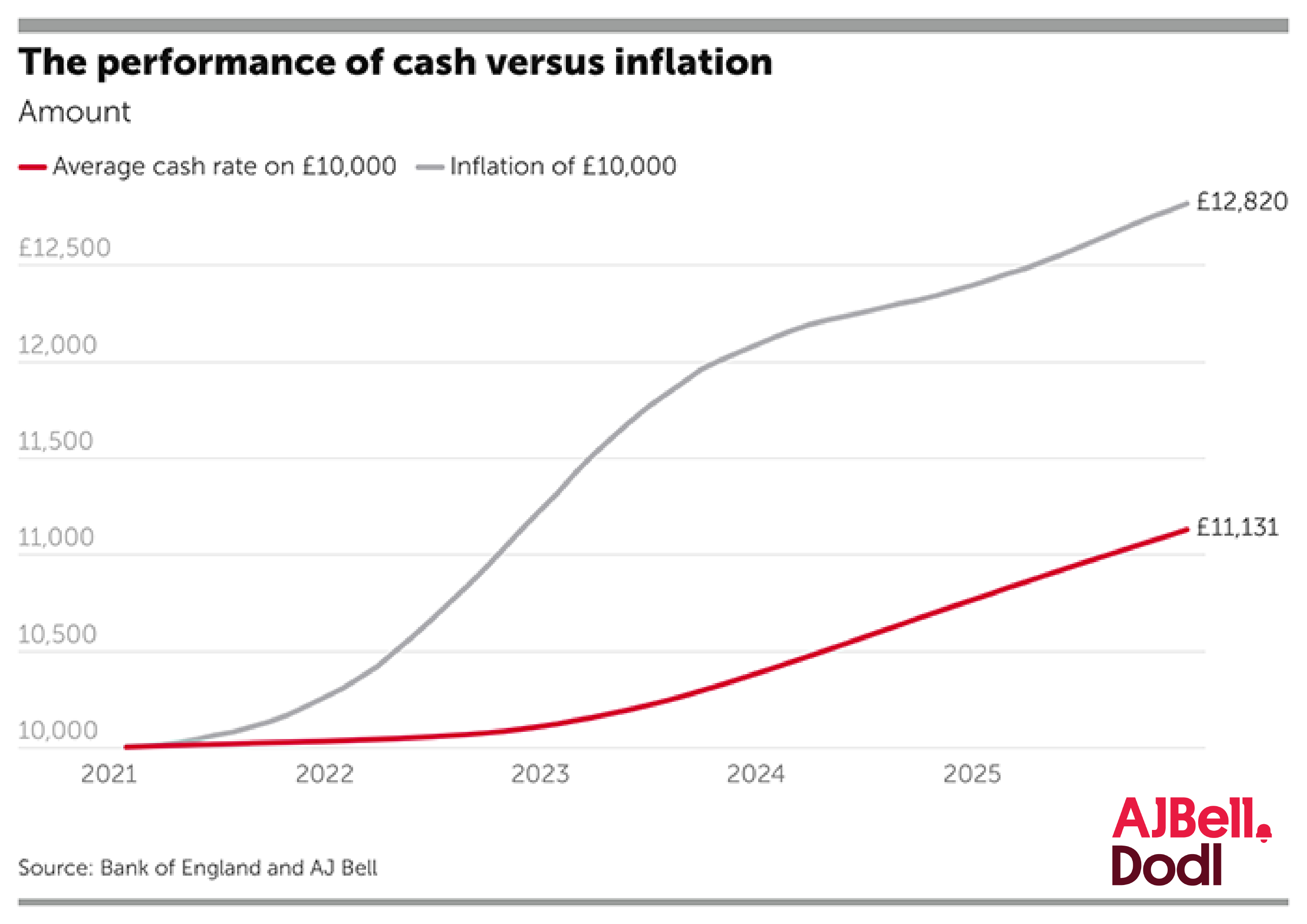
Suddenly, it’s a bit painful. Your savings – in terms of buying power – would now be worth just £8,683. Rather than looking at 11.31% growth, you’re nursing a 13.2% loss. Ouch.
So, what if you’d invested it?
Let’s take the same £10,000, but invest it this time. We’ll use the AJ Bell Balanced fund – a middle-of-the-road option designed to balance risk and reward.
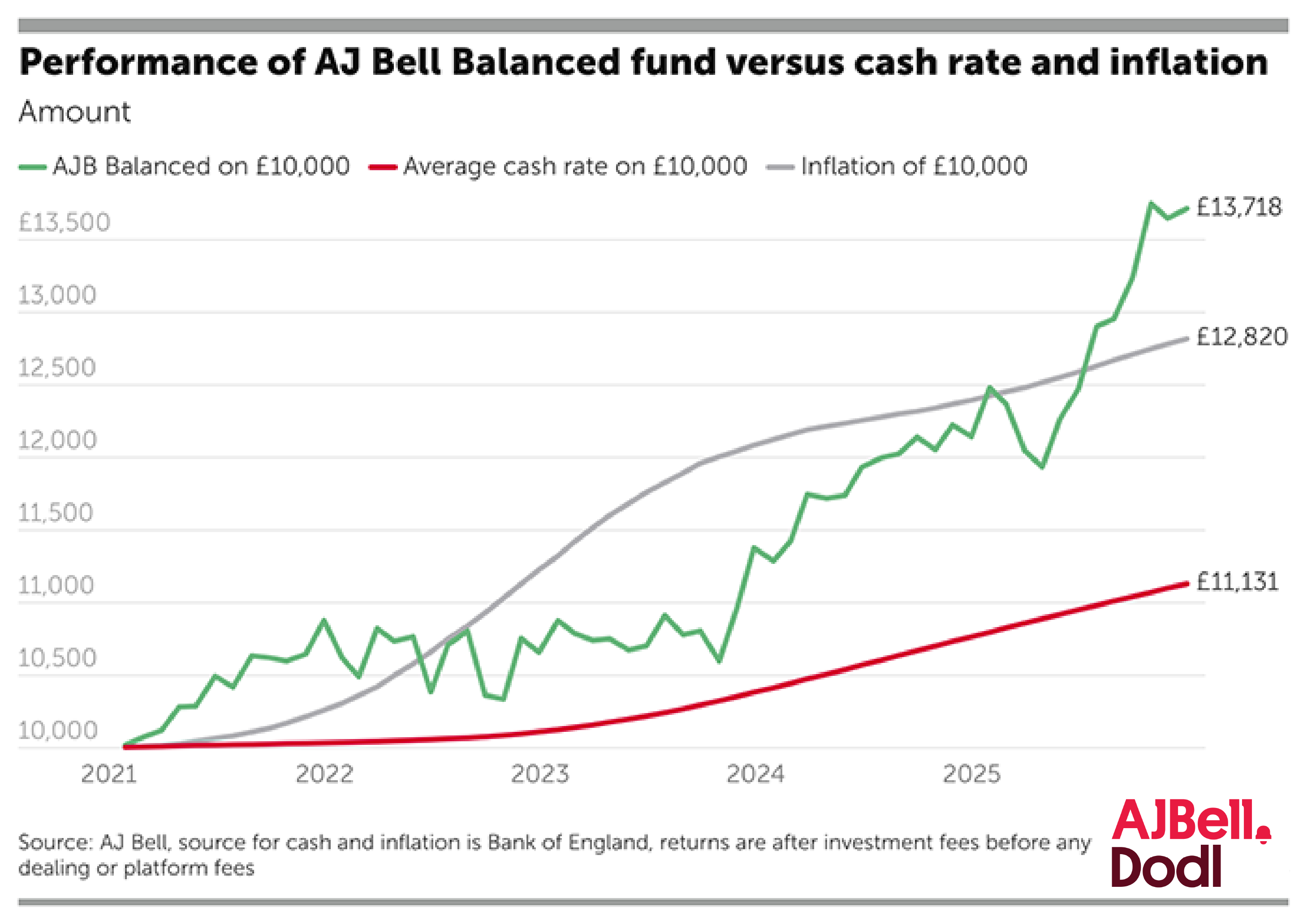
Over the same period, your £10,000 would have grown to £13,718 (which factors in the fund's ongoing charge of 0.31%). That’s a 37.18% increase. When considering the Dodl 0.15% platform fee (minimum £1 a month), your total net return would be £13,432.
And what about inflation? Factor that in too, and you'd be sitting on £10,701 – that's still 7.01% better off.
Sure, investing would have meant a bumpier ride. But the destination would have been worth it.
It's all about the long term
Of course, this is all based on past performance. And as the well-known saying goes, that’s no guarantee of future returns.
But over the long term, the pattern has been clear: investing has historically outpaced both cash savings and inflation.
Your turn next?
If you're inspired by what you've seen, you're in the right place. The AJ Bell Balanced fund is one of your investment options on Dodl.
It's one of the AJ Bell funds, where our investment experts handle everything for you. And you’ve plenty of other options to choose from, including themed investments and shares.
Don't let inflation silently nibble away at your savings. Put more money to work today.
Read more in this series
Don’t have a Dodl account yet? Open yours and get started.
🔔Remember that the value of investments can change, and you could lose money as well as make it. AJ Bell Dodl doesn’t give advice. If you’re not sure about the risks of investing, please speak to a qualified financial adviser.